Home → Delivery Reset
Delivery Reset

You've tried to fix this before. This time it sticks.

You've reorganized the board, tried the new meeting format, maybe even hired someone for a few days. It helped for a while. Then you were back in the same meeting, wondering the same thing. The Reset is different because I measure before, during, and after. Eight weeks of hands-on work alongside your team, with data to prove it worked.

8 weeks · tapering from intensive to handover€20,000 · fixed price
Book a free 30 min call
Sound familiar?

Quick fixes didn't hold. You need something that survives contact with reality.

You've been here before. New process, new board, new meeting format. It worked for three months. Then a big deadline hit, things got chaotic, and everyone quietly went back to how it was before. The problem isn't discipline. The fix wasn't designed for your team.

You can't tell stakeholders when things will ship. Not because your team is slow, but because you have no reliable way to forecast. Every estimate is a guess. Every deadline is a negotiation. You need a number, not a feeling.

Your task list is a graveyard. 200 items in the backlog, half of them from last year. Nobody's sure what's refined, what's ready, what's abandoned. The team picks work based on what's loudest, not what's most important. Priorities are set by whoever's in the room.

How it works

Eight weeks. Three phases. More at the start, less at the end.

The engagement is designed to prove it's working by how little you need me by the end. Intensive at the start. Lighter as your team picks it up. Gone by week eight. If I'm still needed at week seven, something went wrong.

Weeks 1-2 Learn and redesign High intensity

Before I change anything, I need to understand how things actually work. Not how the wiki says they work. How decisions get made, where work stalls, what "done" means to each person on the team (spoiler: it's different for everyone, and that's where half the confusion lives).

I map the current workflow
I sit in meetings, open the board, talk to the people doing the work. Same approach as the Delivery Kickoff, but with more time to go deeper. I build a model of how work actually moves through your team, where handoffs happen, where things get stuck.
I run the first delivery risk scan
This is usually the most important moment of the entire engagement. You've been wondering for months: are we behind? How bad is it? The scan answers that with a number. Not a feeling, not a traffic light. A probability for every commitment your team has made. The most common thing I hear after presenting the results is "I knew it was bad, but I didn't know it was this specific." That's where the real work begins. Two more scans follow at week four and week eight, so you can see the trend. How the scan works →
We redesign the system together
Board structure, meeting format, definition of done, priority-setting process. Built for your team, not copied from a textbook. I co-design it with the people who'll use it, because a process that's imposed doesn't stick.
Weeks 3-6 Work alongside the team Tapering

This is where most quick fixes fail. The new process meets real life: a priority changes, a dependency doesn't land, a stakeholder shows up with an urgent request. I stick around to help the team navigate those moments with the new system instead of falling back to the old one.

Delivery coaching
I'm in the daily meeting when it starts drifting back to 40 minutes. I'm looking at the board when tickets pile up in review. I'm in the room when a scope conversation goes sideways. Not to take over, but to coach the team through it in real time. The goal is that they handle the next one without me.
Cleaning up the backlog
I work with your PM or tech lead to clean up the list of planned work: what stays, what goes, how to structure it so priorities are clear. How to refine work before it enters the flow. How to say no to things that don't matter yet. This is usually where the biggest time savings come from.
Course-correcting as problems hit
No process survives first contact perfectly. Some parts of the new setup will need adjusting after a week or two. I iterate on it with the team while we're still working together, so the version I hand over is the one that actually works, not the theoretical version from week two.
Second scan at week four
Halfway through, I run the scan again. Are the numbers moving? Which commitments look better? Which ones didn't budge? This is where we adjust course if something isn't working.
Weeks 7-8 Hand over and step back Light touch

By now, the team is running the process themselves. These last two weeks are about making sure it holds without me. I document what we changed and why, flag the risks I still see, and make sure the people who'll own this going forward are confident in it.

Written handover
A document covering: what changed, why, how to maintain it, and what to watch for. Not a 50-page report. A practical reference your team lead or PM can use when they hit a situation they haven't seen before.
Final scan
The third and last scan. This is the proof: how do the numbers compare to the baseline from week one? This report is designed to be shared with your board, your investors, or your clients. It shows what changed, not just what you tried.
Follow-up check-in
Four weeks after the engagement ends, we check in. What stuck? What didn't? What needs adjusting? This conversation is as valuable for me as it is for you.

Three scans. Not a snapshot. A trend.

The Reset includes three delivery risk scans across the eight weeks. A baseline at the start, a progress check at week four, and a final measurement at the end. You don't just see where you are. You see how far you've come, with data.

Scan 1 (week 1): The baseline. Where do you actually stand on every commitment? This is usually the uncomfortable conversation. It's also the most important one.

Scan 2 (week 4): The progress check. Are the process changes moving the numbers? Which initiatives improved? Which ones didn't? This is where we adjust.

Scan 3 (week 8): The final measurement. Proof that things changed, not just a feeling. This is what you show your board, your investors, or your clients.

Each scan simulates every active commitment 10,000 times using your team's real workflow data. The output is a probability, not a guess.
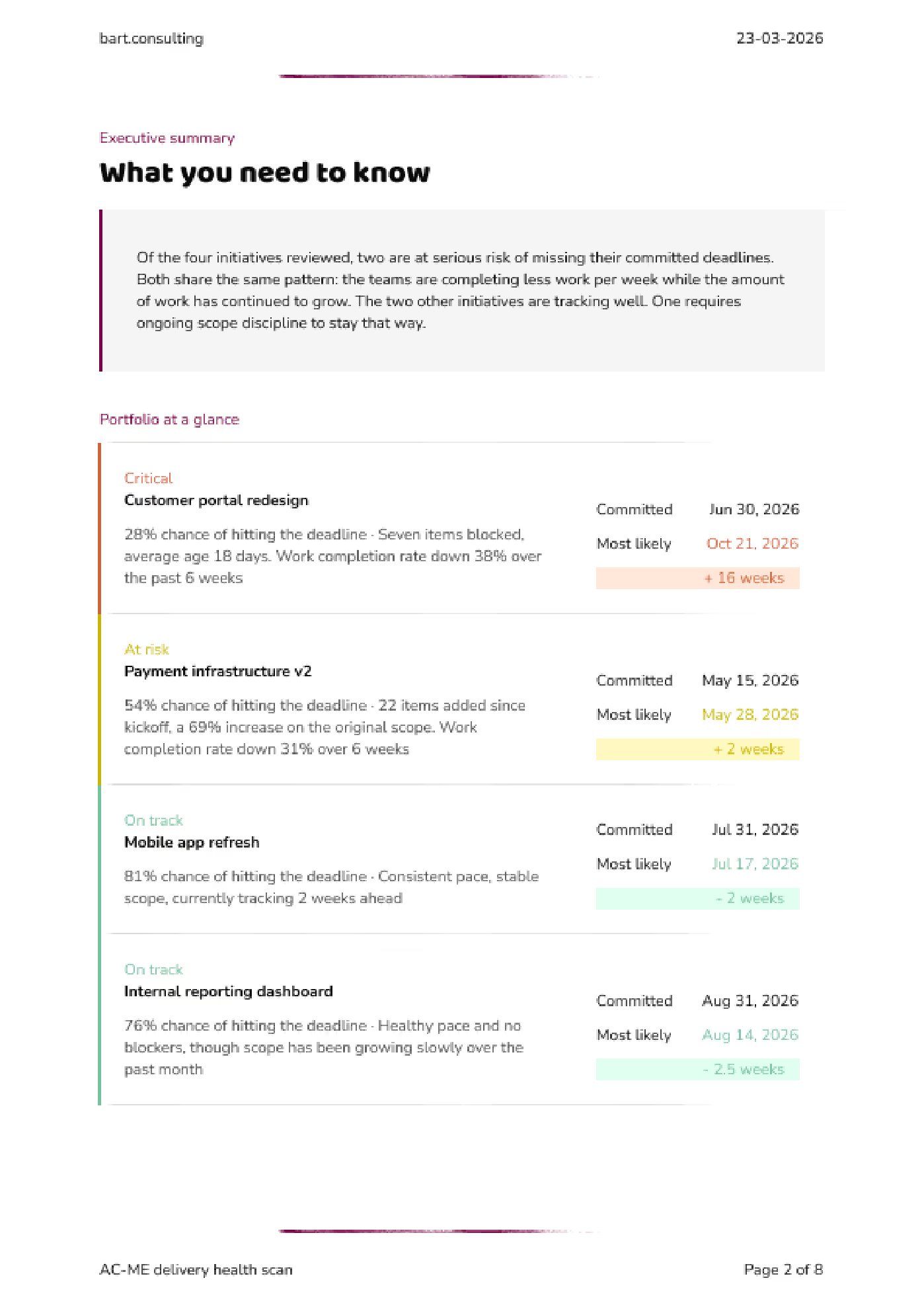
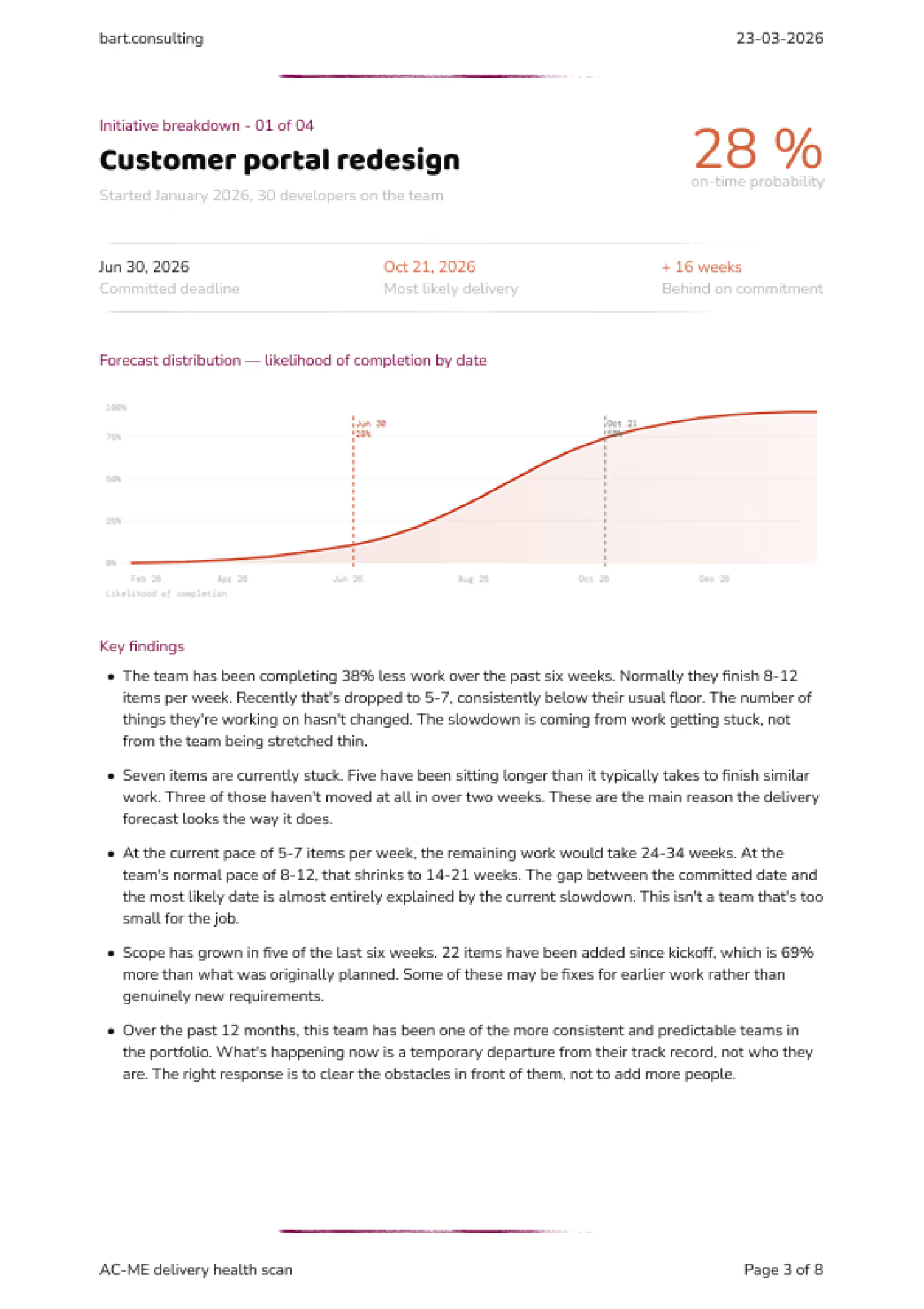
Delivery risk scan executive summary Initiative forecast distribution curve
What's different after eight weeks

A team that ships predictably, not one that depends on you

The goal isn't to build a process the team follows while I'm watching. It's to build one they maintain because it works.

A way of working tailored to your team

Not a template from a methodology book. Not a framework copied from a blog post. A workflow designed around how your team and company actually operate, tested and adjusted over six weeks of real delivery.

Proof that things improved

Three scans across eight weeks give you a trend, not a snapshot. You can show your stakeholders the baseline, the progress, and the result. Data, not promises.

A clean, prioritized task list

The 200-item graveyard is pruned. What's left is structured, refined, and ordered. Your PM or tech lead knows how to keep it that way.

Shorter, better meetings

Daily check-ins that take 10 minutes. Planning sessions that produce clear outcomes. Meetings where people make decisions instead of narrating status.

Your people own the process

I coach your PM, tech lead, or team lead to run the system themselves. Not by handing them a manual. By working alongside them until they're doing it without thinking about it.

A written handover

What changed, why, how to maintain it, what to watch for. A practical reference document, not a consulting deliverable that sits in a drawer.

Investment

Eight weeks costs less than eight months of missed deadlines

€20,000
Fixed price · VAT excluded
Can be split across two invoices

Some context on that number. A team of five missing deadlines by a month costs roughly €40,000 in burned salary and client trust. But the real cost isn't on a spreadsheet. It's the client email you dread opening. The board meeting where you have to say "it's delayed" again. The developer who's thinking about leaving because nothing ever ships. The Reset pays for itself if it saves your team one bad quarter.

Split invoicing. If your finance process requires it, the €20,000 can be split across two invoices: one at the start, one at the midpoint.

Is this right for you?

The Reset is for teams that have tried the quick fix and watched it fade

You've fixed this before and it didn't last

You ran a team retrospective, introduced a new board, tried daily check-ins. It worked for a while. Then things got busy, the process slipped, and you were back where you started. The Reset works because I stay long enough to iterate through the hard parts with you.

You need to prove it to stakeholders

Your board, your clients, or your investors want to see progress. Not promises, not slide decks. Data. The scan gives you a number they can understand, and the process changes give you something real to point to.

Not sure if you need a Kickoff or a Reset?

If the problem is fresh and you just need a clear setup, the Delivery Kickoff (2 days, €5,000) might be the right starting point. If you've already tried the quick fix and it didn't hold, you're probably here for the right reason. Either way, book the call and I'll tell you which one fits.

Questions

Things people ask before committing

"Are you in our office every day for eight weeks?" +

No. Weeks 1-2 are intensive: I'm with the team, learning the workflow, running the first scan, co-designing the new setup. Weeks 3-6 I'm present for key moments but not every day. Weeks 7-8 are light touch: handover and documentation. The whole design is that you need me less as we go. That's how you know it's working.

"What if we need more time?" +

Eight weeks has been enough for every team I've worked with. The follow-up check-in four weeks after the engagement is specifically designed to catch anything that needs adjusting. If something deeper surfaces, we'll address it then. But it hasn't happened yet.

"How much of our team's time does this take?" +

In weeks 1-2: a few hours from 2-3 people for conversations, plus time in your existing meetings. After that, the work happens inside the meetings and workflows your team already has. I'm not adding overhead. I'm inside the existing rhythm, making it work better.

"What if our problem is actually product strategy, not delivery?" +

Then a Reset won't fix it. If you're building the wrong thing, delivering it faster won't help. That said, the two are often tangled together. I'll flag it in the first two weeks if I think the issue is upstream of delivery. The call is free — bring the question and I'll give you an honest answer.

"Can we run the scans ourselves after you leave?" +

Not yet. The scans require tooling and interpretation that I bring. What you keep is everything else: the process, the board, the backlog structure, the meeting format, the coaching. The scan is something I do for you, not something I install. If you want a fresh scan six months later to see how things are holding up, I can run one separately.

"Can we start with a Kickoff and upgrade to a Reset?" +

Yes. Some teams start with a Kickoff to get immediate clarity, then come back for a Reset when they realize they need deeper, sustained support. The Kickoff fee applies toward the Reset if you decide to continue within four weeks.

This has worked before

What actually happened

Factry
Factory operating system · ~12 people · Ghent

I embedded with the team, went to the factory floor, and redesigned how client implementations were delivered. A one-hour daily meeting went down to 15 minutes. The next comparable implementation took 6 months instead of 18. Three times faster.

Read the full story →
Spotto
Real estate marketplace · CIB Vlaanderen

I introduced structured user contact and evidence-based prioritization to a team that was shipping fast but building blind. The team stopped building the wrong things. That focus contributed to the platform growing from 10,000 to over 100,000 monthly visitors.

Read the full story →

I can't write a single line of code and I don't understand a word the development team says. But thanks to Bart, everyone knows what's being built, why, and when it's ready.

Jantien Vanderbeke, Marketing lead, Spotto

He sees the unique strengths of his colleagues, helps them grow, and brings them together around shared goals in a way that feels natural.

Els Cornelis, Customer success lead, Spotto

Not ready for eight weeks?

The Delivery Kickoff is two days, €5,000. You get a clear setup, an honest assessment, and a plan for the next four weeks. If you need more after that, the Kickoff fee applies toward a Reset.

Learn about the Kickoff →

Let's figure out what you need

30 minutes. No pitch. You tell me what's been tried, what's broken, and what you need to be different. I'll tell you whether a Reset is the right move, or if something else makes more sense.

Book a free 30 min call